Four products from a folder of old notes
I had seventeen working documents I'd written for myself and never looked at again. Four of them were products. Here is how I told which, and what had to come out before they could be sold.
Every person who has worked at a desk for a few years is sitting on a folder like mine. Plans, playbooks, calculators, checklists — things written once for a real problem, used, and then left. Seventeen of them, in my case, spread across a year.
Last night I went through all seventeen and asked one question of each: would a stranger pay for this? Four of them, it turned out, would. This is what separated those four from the other thirteen, and what I had to change before any of them could go on sale.
The test that actually sorts them
A document is a product when it passes three filters at once. Miss any one and you have a nice document.
One: it survives losing you. My notes are full of things that only work because I know the context. A plan that says "chase the usual suppliers first" is worthless to a buyer. A plan that says "send five messages between 9 and 11am, then wait an hour" is not. If the reader would have to ask you a question to use it, it is not finished.
Two: it has a stranger. Not "someone might find this useful" — an actual person you can describe in one sentence. A freelancer who wants to sell websites to local businesses but has never sold anything. That person exists in large numbers and can be reached. Compare it with a finance manager at a mid-sized trading company who wants to defend margin: also a real person, but there are about eleven of them and I know most of their names.
Three: it is a system, not an opinion. The four that passed all contain something mechanical — a template you fill in, a script you send, a calculator that computes, a sequence you follow. The thirteen that failed were mostly thinking: good thinking, but a buyer cannot run it.
By that test, thirteen of my seventeen documents were strategy notes for one specific business — mine. Useful to write, not sellable. That is a normal ratio and it is worth knowing before you start, because the temptation is to package all seventeen.
What had to come out
Everything that passed the test still failed a second one: it was written about real people and a real business. Turning a working document into a product is mostly deletion.
- Every name. Client names, business names, contact names — even in an example. A "sample" prospect that is a real business is not a sample.
- Every real phone number, including my own. The scripts now carry
{YOUR_NUMBER}, and the reader fills it once. - Every currency figure. My prices are set for one city. A buyer in Manchester or Lagos reading "AED 1,800" learns nothing except that this was not written for them. All four products now open with a page that sets their numbers, and every script downstream reads from that page.
- Every claim I could not defend to a buyer's face. The launch plan originally carried a revenue number in its title. It does not any more. What it carries instead is the arithmetic, three scenarios wide, and a sentence saying plainly that nobody can promise you the top one.
That last deletion was the hardest and it is the one I would insist on. A product with a number in the title sells better and refunds harder, and the refund is the smaller cost — the larger one is that you cannot say the sentence out loud to someone's face.
What four looked like at the end
| Was | Became |
|---|---|
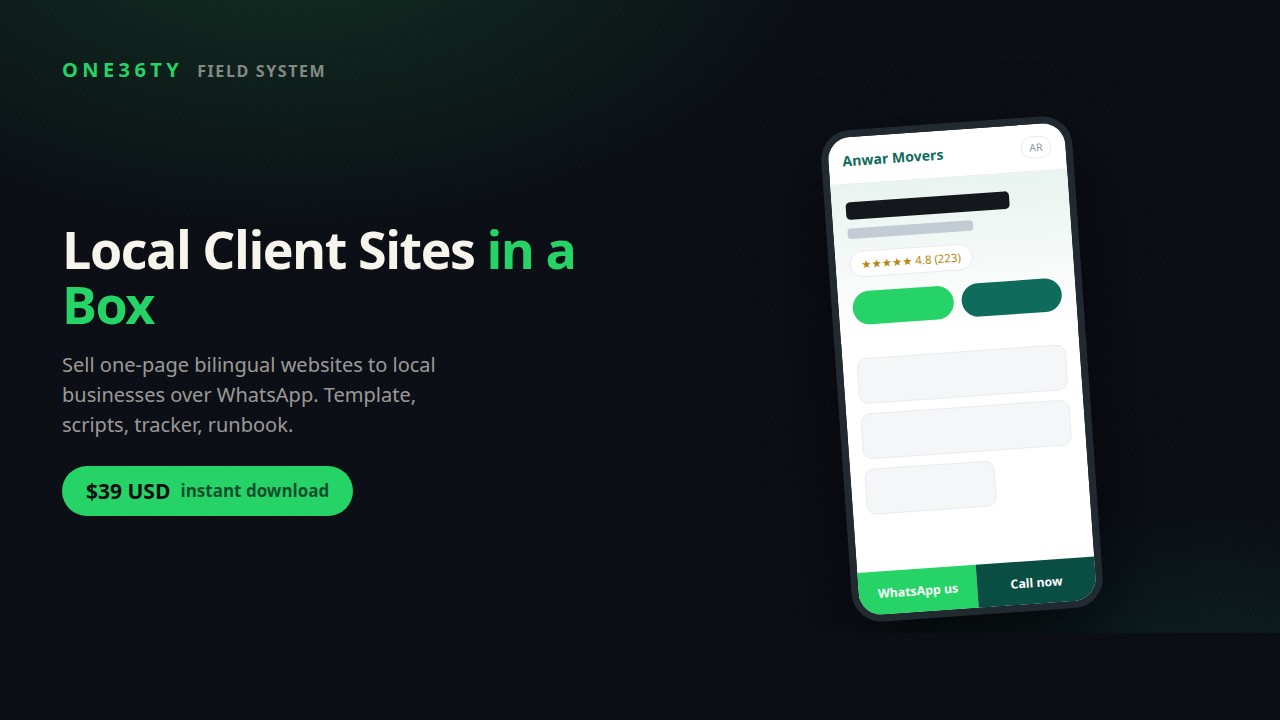
| Two overlapping playbooks about selling websites on WhatsApp | One kit: site template, prospect tracker, every message in English and Arabic, delivery runbook |
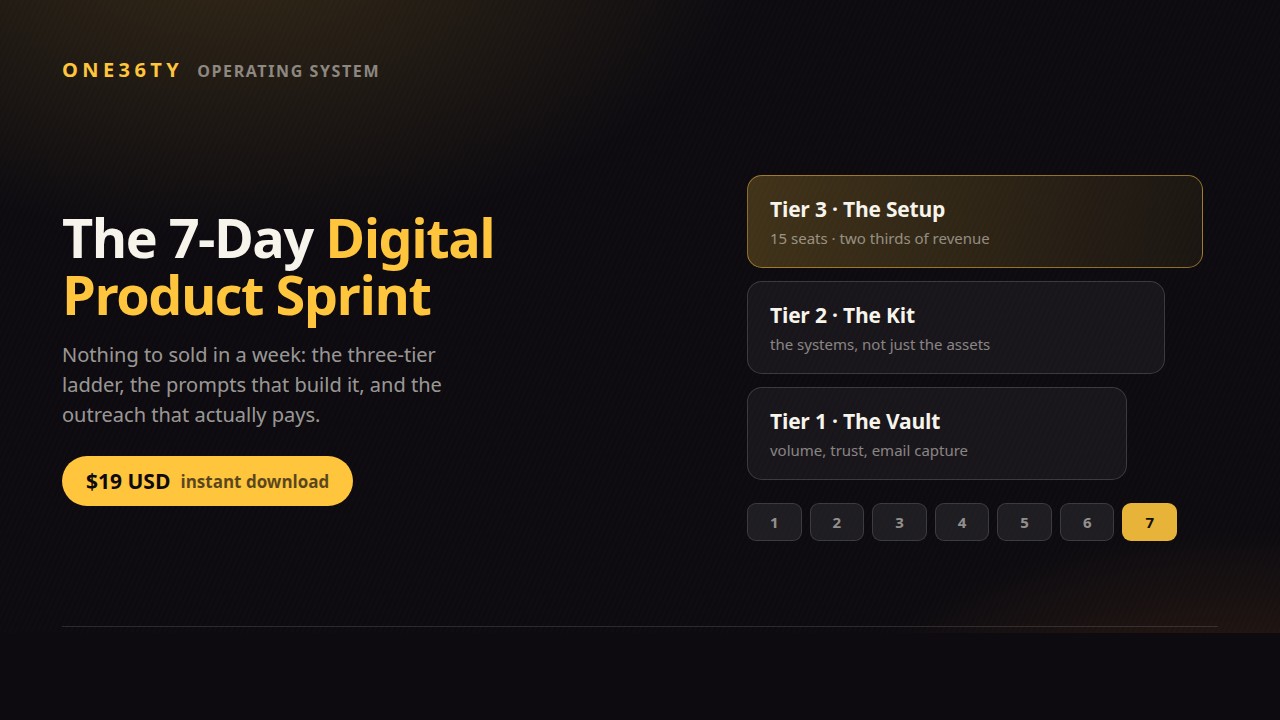
| A seven-day launch plan written for one specific week | A launch system with the week left generic and the maths shown three scenarios wide |
| A prompt library for one video project | Thirteen styles, twelve prompts each, with the house rules built into every prompt |
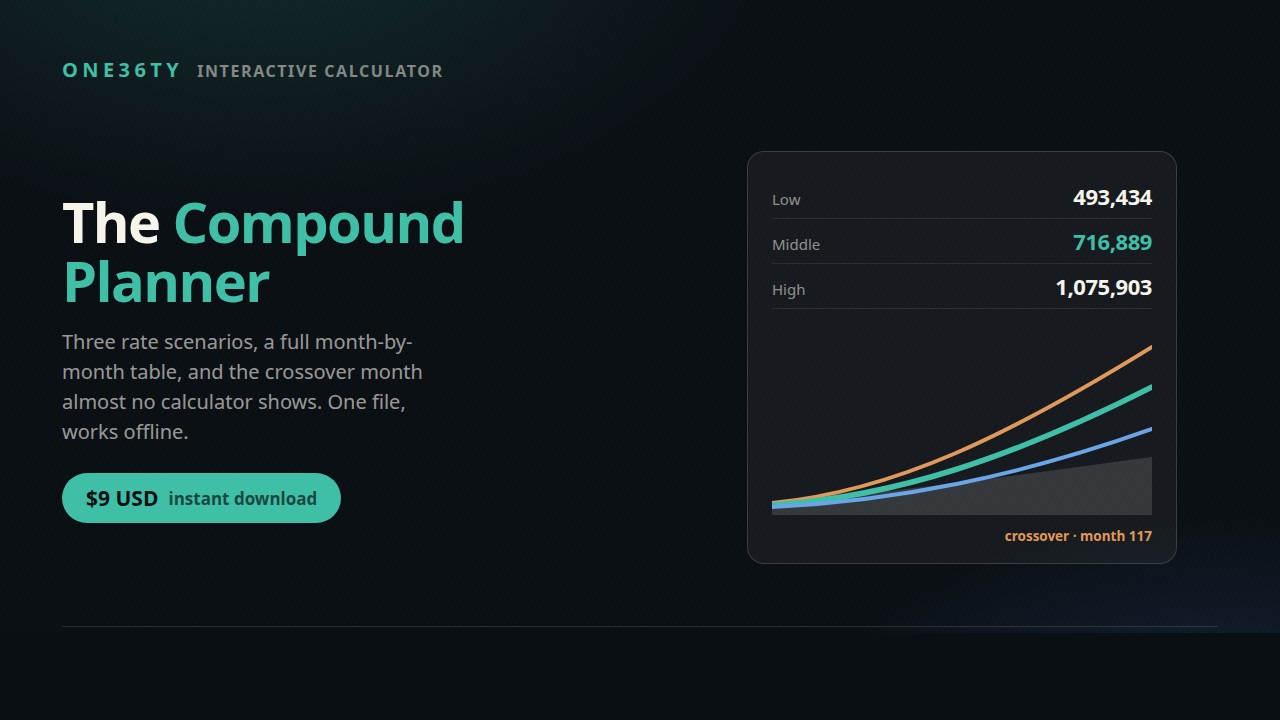
| A ten-year projection built for one investor conversation | A calculator anyone can open, offline, in any currency |
Roughly four hours of work, most of it deleting. None of the four is a new idea. All four already existed as things I use.
The part I keep having to relearn
I did not write any of these documents in order to sell them. That is exactly why they are worth selling — they were built to survive contact with a real problem, which is the one quality you cannot fake while writing a product on purpose.
So the honest advice is not "go write a digital product this weekend." It is: go read your own folder. The work is already done. What is missing is four hours of deletion and the discipline to throw out the thirteen that did not pass.